

The energy transition and the spread of digital technologies continue to be the main drivers influencing all markets, including the shipbuilding sector, creating new opportunities and leading to the emergence of new business models. This context is favorable for our Group, thanks to our distinctive expertise in high value-added shipbuilding.
We aim to excel in the construction and full lifecycle management of digital and “green” ships for the cruise tourism, defense, and energy sectors, with particular focus on renewables, leveraging synergies across different sectors and ensuring maximum overall value for our clients. We are also committed to expanding our scope to the underwater domain, which is instrumental for national defense systems and the security of strategic offshore infrastructure.
All these factors contribute to strengthening our international competitive positioning and the entire production chain, while respecting sustainability issues.
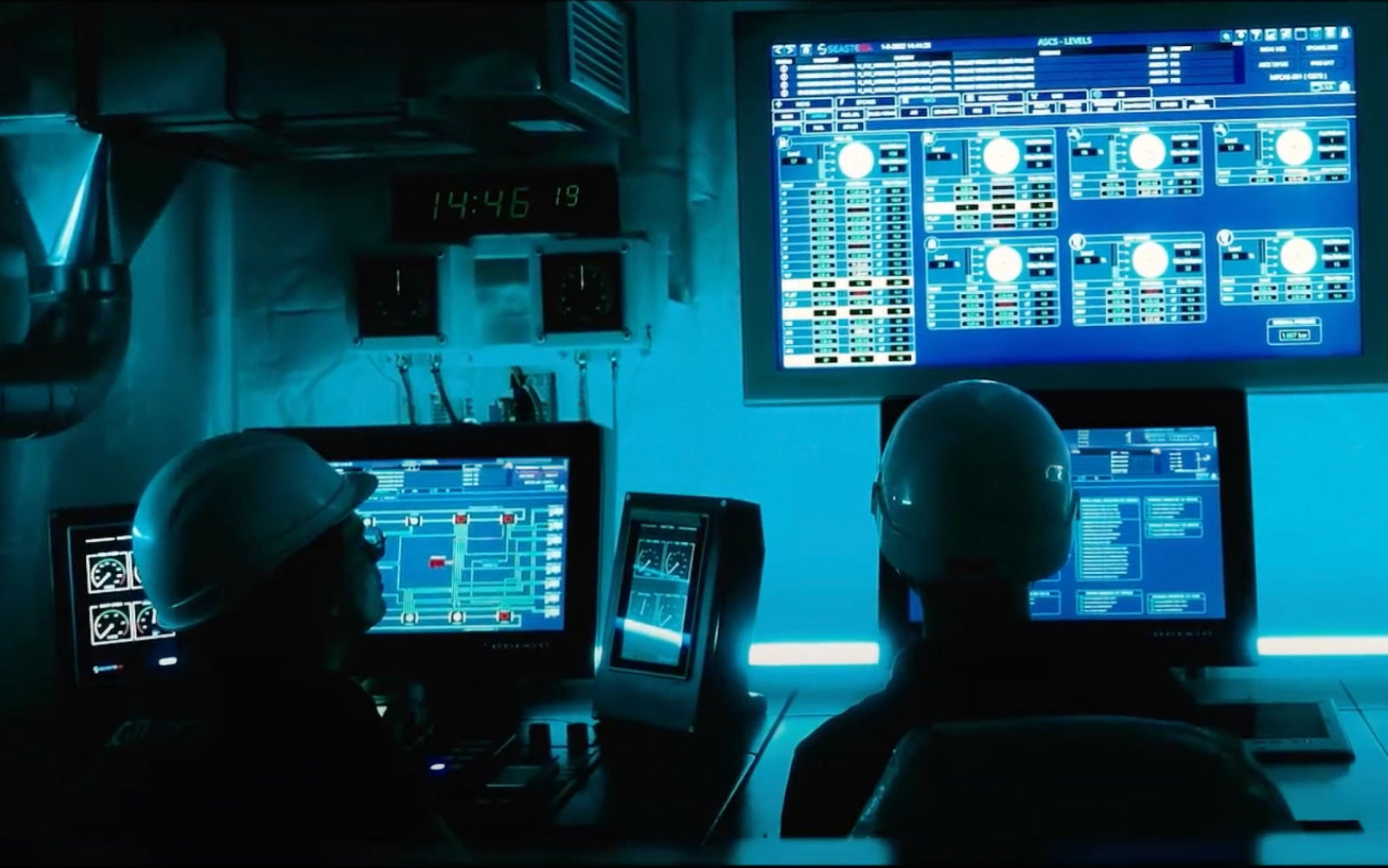
Also in 2024, we confirmed our position as global leaders in the cruise ship sector, with over 40% market share and more than 130 ships built since 1990—over one third of the current global fleet in operation. Our clients include the world’s leading cruise tourism players.
As of December 31, 2024, our order book includes 28 ships scheduled for delivery through 2033.
The cruise industry enjoys very favorable long-term trends, with a record-breaking 2024. Leisure spending is increasing, and the share allocated to travel is growing at an even faster pace—a trend expected to continue. The appeal of cruising lies in its strong value-for-money proposition compared to land-based vacations. Cruising has become a mainstream holiday product, attracting an increasingly broad audience, including younger travelers.
In 2024, shipowners decisively restarted their investment programs: 19 ship orders were finalized (9 of which are with Fincantieri) and contracts, agreements, and letters of intent were signed for another 14 ships (including options), with execution subject to customary customer financing. Order recovery spanned all segments, from luxury to contemporary, with slot reservations for deliveries well beyond 2030. This reflects the complexity and high value of new-generation ships, which require building strong partnerships with clients to harmonize desired design, technological, environmental, and digital choices, and to address the increasing production lead times.
A virtuous cycle has resumed—similar to 2016–2019—marked by orders exceeding deliveries, resulting in restored workload and extended business visibility.
The outlook for new orders reflects expected growth in cruise passenger numbers and fleet size, taking into account the phase-out of older, less attractive and profitable vessels, also in response to new emission regulations.
We have always operated in the defense sector and, since 1990, have delivered over 140 naval units, more than 50 of which were to Italy. We are one of the leading operators for high-tech surface ships, specialize in submarine production, and, since 2024, have played a leading role in the development of the underwater sector.
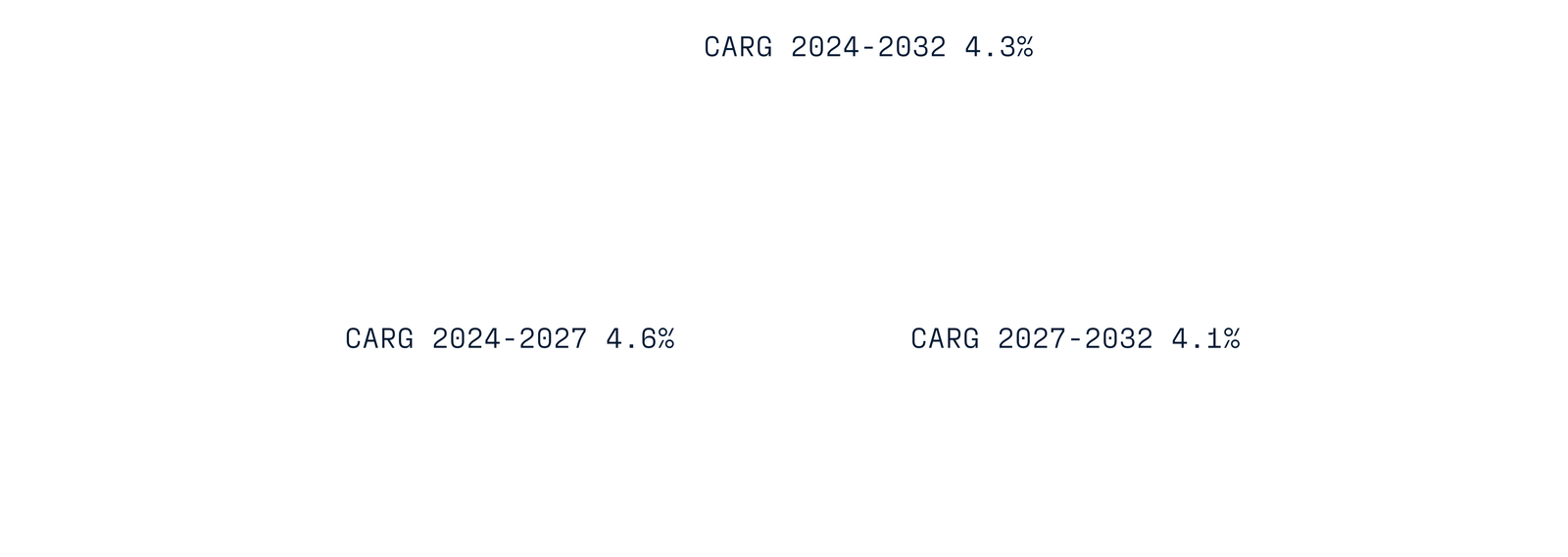
The current geopolitical scenario is driving increased defense spending: for the period 2025–2029, growth is expected at an average annual rate of +1.5%. The budget allocated to the naval domain is also set to rise, supporting demand for new vessels.
At the European level, the military industry is led by individual states, each with its own budget. This results in fragmented platforms and lower resource efficiency. Nonetheless, the industry’s weight in the naval domain is significant: in 2024, the total value of programs awarded to the network of European shipyards by European and foreign navies accounted for 45% of global orders.
In terms of Fincantieri’s cooperative initiatives in Europe, as part of the second call of the European Defence Fund, the proposal for the European Patrol Corvette (EPC) program—aimed at developing a Modular and Multirole Patrol Corvette (MMPC) and presented by the consortium coordinated by Naviris—was selected by the European Commission.
In the domestic market, the expansion and modernization program of the Italian Navy materialized in orders for two “EVOLUTION” FREMM frigates and a fourth next-generation patrol vessel.
In the U.S. market, options were exercised in 2024 for the fifth and sixth next-generation multirole Constellation-Class frigates.
Internationally, we are continuing to develop established programs (e.g., FREMM and PPA) tailored to the needs of our clients, and to pursue opportunities in the segment of smaller vessels, also by entering into agreements with local operators.
The current geopolitical situation has highlighted the fragility of the global system of energy and communication infrastructures, including those at the national level. For the Mediterranean—which serves as a crossroads between three continents—the underwater domain is becoming strategic, with intelligence, surveillance, defense, and deterrence activities taking place. The region is characterized by significant economic flows, representing 20% of global maritime traffic, and is marked by increasing instability.
Over the past two years, we have finalized a series of agreements and acquisitions aimed at strengthening our technological leadership in the underwater domain, a sector that is crucial for the future of maritime security and technology. With the launch of the new Underwater Technology Hub, we have entered a strategic domain of extremely high technological complexity, where the ability to integrate advanced systems and develop dual-use solutions will be critical for European competitiveness and national security. With a market estimated at around €50 billion per year, and an accessible component of about €22 billion annually, we position ourselves as a driver of the underwater transformation, offering integrated solutions ranging from defense to infrastructure security, offshore energy, aquaculture, and deep-sea mining.
In 2024, we confirmed our position as the leading player in the market for vessels supporting offshore wind development, with 19 CSOV, SOV, and 4 cable-laying vessels in our order book—new generation ships characterized by high operational and environmental efficiency. Moreover, over the past year, we responded to the emerging demand for flexible vessels suitable for construction or maintenance activities, capable of operating in subsea environments and supporting both offshore wind and Oil & Gas projects.
Regarding the offshore wind sector, by the end of 2024, global installed capacity reached 74.6 GW and, according to the current project pipeline, is expected to grow to 410 GW by 2035[6]. The demand for clean energy remains a solid driver for offshore wind growth, even if its development is progressing slowly. Despite government support for green transition policies and ambitious targets, there remains a gap between declared objectives and actual sector development. Issues such as permitting processes, securing financing, supply chain bottlenecks, and the realization of energy transmission networks continue to hinder a faster growth phase.
Trump's energy policy direction could halt the expansion of wind power in the United States. However, for some operators, the consequences might be less severe since individual states can decide whether to continue projects, regardless of federal support.
Overall, the development of renewables is boosting demand in the maritime sector for specialized vessels supporting the construction and maintenance of offshore wind farms, such as CSOVs, SOVs, and cable-laying vessels for grid installation and onshore connections.
In 2024, robust energy demand also revived investments in the Oil & Gas sector, creating demand for highly flexible vessels dedicated to construction or maintenance activities, including subsea operations, and supporting both offshore wind and Oil & Gas projects.
Given this scenario, 2024 ended with the formalization of 21 Multipurpose Supply Vessel (MSV) orders, including OECV/ECV51 (plus 4 conversions). Our Norwegian subsidiary VARD has successfully captured these new market trends, securing a strong position by acquiring orders for 8 innovative, all-hybrid-propulsion vessels. As of December (including conversions), the order book consisted of 33 vessels, 13 of which are attributable to VARD.
[6] Source: 4COffshore, Global Market Overview Q4 2024.