
Fincantieri also contributes to the achievement of the United Nations 2030 Agenda for Sustainable Development


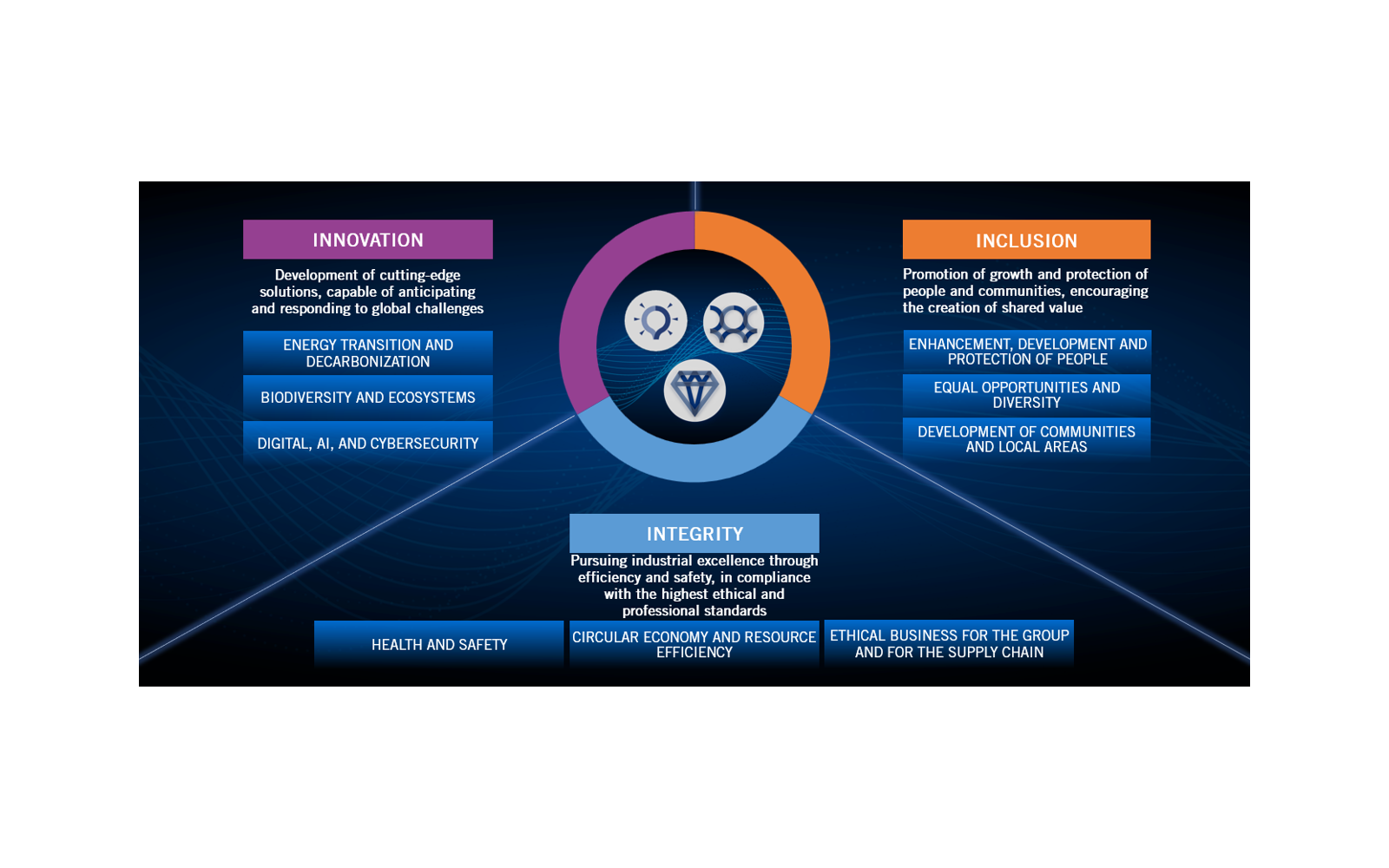
We regard financial, social and environmental sustainability as a strategic driver of every decision we make. Therefore, our sustainability strategy and its three pillars —Innovation, Inclusion and Integrity — are fully embedded in the Fincantieri 2026-2030 Business Plan F4 - Fast. Forward. Further. Future., approved along with the 2026–2030 Sustainability Plan by the Board of Directors of Fincantieri S.p.A. on 16 December 2025.
Through a continuous process of technological transformation, we advance energy and digital transitions, fostering sustainable development models and enhancing the skills of our people and partners within a systematic framework. The principles of the blue economy are applied across the entire value chain to promote ethical business conduct and a responsible supply chain, and guide us in integrating economic growth, environmental stewardship and social progress. In doing so, we promote safety and security, generate shared value for communities, businesses and territories, and strengthen our global leadership.
The Industrial Plan and the Sustainability Plan share the Innovation, Inclusion and Integrity Pillars, along with the related objectives, contributing also to the achievement of the United Nations Sustainable Development Goals (SDGs).
Overview on the Sustainability Plan Structure
The 2026–2030 Sustainability Plan translates the three development pillars into nine strategic themes, identified based on the results of the double materiality assessment, conducted in accordance with the European Sustainability Reporting Standards (ESRS), and key developments in the economic, technological and regulatory landscape. The Plan's objectives thus address the Group's material impacts, risks and opportunities.
The nine strategic themes encompass major sustainability challenges, including the decarbonization of production processes and products, biodiversity protection, the digitalization of products and processes, people development and well-being, equal opportunities, local community development, occupational health and safety, the adoption of circular economy practices, and ethical and responsible supply chain management.