At Fincantieri, we believe that technology should serve people and foster shared progress. From this perspective, artificial intelligence represents a significant opportunity to innovate responsibly, improve our processes and create value for all our stakeholders.
To guide its development and use, we have adopted an Ethical AI Policy, approved by the Board of Directors, and established an AI Ethics Committee with supervisory, advisory and control responsibilities over the introduction and evolution of AI technologies and the related risks. Our approach is also based on Ethics by Design, integrating ethical considerations from the earliest stages of technology design, and on the Human-in-the-Loop principle, ensuring human oversight in critical automated decisions.
In designing and implementing AI systems, we assess each system according to its level of risk and apply proportionate controls; we manage data securely and responsibly; we monitor and address potential algorithmic bias; we promote transparency and clarity in automated decision-making processes; we maintain clear mechanisms for accountability and human oversight; and we protect the confidentiality of personal data. These principles are supported by three cross-cutting drivers, which accompany the Group’s technological development and innovation journey:
Due to its unique features and potential, AI demands a conscious governance approach, rooted in strong ethical principles. For this reason, we have adopted the Ethical AI Policy, approved by the Board of Directors and applicable to all Group companies and to parties involved across the value chain. The document reflects our core values and incorporates internationally recognised ethical, regulatory, and social standards, in line with the principles of the OECD, the G7, UNESCO, and the European AI Act.
Through the Policy, we have defined our commitments to the responsible use of AI. In particular, we aim to:
The management of artificial intelligence at Fincantieri is grounded in structured governance, a concrete commitment to transparency, and a corporate culture deeply oriented towards responsibility.
We have established an AI Ethical Committee with supervisory, advisory, and control responsibilities. The Committee oversees the introduction and evolution of intelligent technologies, assesses their risks, and verifies their full alignment with our ethical principles and the fundamental rights of individuals.
We have established control tools and processes relating to the following aspects:
We lead innovation through Ethics by Design approach, systematically integrating ethical principles from the earliest stages of design of our technological solutions. In this way, we promote that the adoption of AI always complies with human rights, transparency, inclusiveness, and privacy protection.
We rigorously apply the Human-in-the-Loop principle, ensuring that human oversight is always present in critical automated decision-making. Active monitoring, real-time intervention, and continuous improvement allow us to maintain ethical and technical control over our technologies.
In designing and implementing AI systems, we are committed to six fundamental ethical principles:
We established the Digital Lab, with the aim of creating a specialised Group-level center of excellence focused on Artificial Intelligence. Several initiatives have been developed within Fincantieri to identify areas where this new technology can deliver the greatest benefits. Among these, it is worth mentioning the development of dedicated solutions in the field of naval engineering, which represents one of the Group’s core business areas.
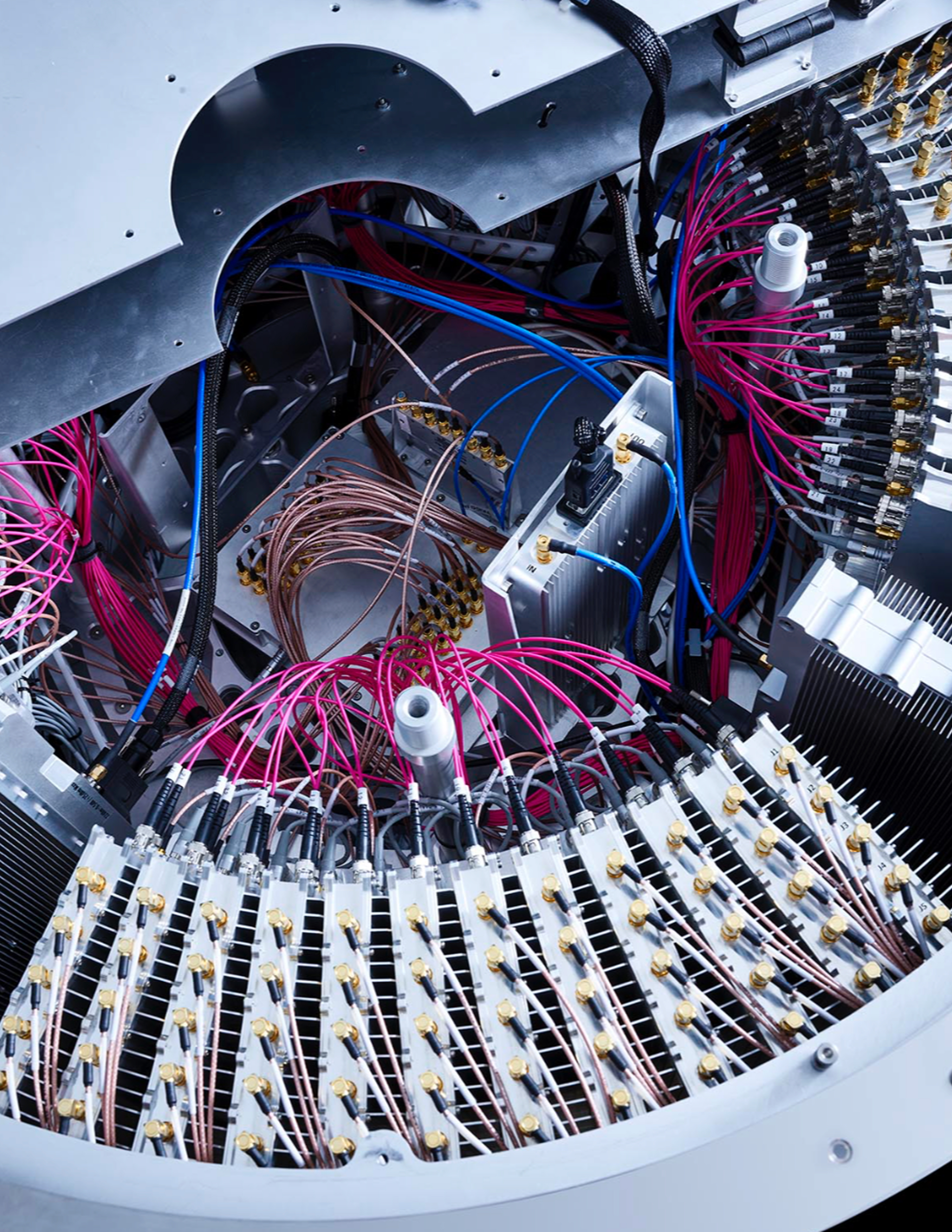
Artificial Intelligence is applied not only to Fincantieri’s internal processes, but also to its products. A first tangible example is the incorporation of AI functionalities in our Omega360 full digital radar, a 4D software-defined radar system, characterized by fast installation and operational deployment, capable of adapting to various scenarios through specialized software classification algorithms.
In 2026, we signed the Technological Innovation Protocol, following discussions with the National Secretariats of FIM, FIOM and UILM and Fincantieri’s National Coordination Committee. The agreement defines a shared pathway for launching pilot projects in digitalisation and artificial intelligence, recognising the contribution of the social partners and promoting employee involvement.
In line with the Business Plan, the Protocol supports the introduction of new technologies through an ethical and responsible approach, with the aim of improving working conditions, increasing safety levels and contributing to the competitiveness of the production system.
The objectives of the 2026–2030 Sustainability Plan relating to Artificial Intelligence are set out below.
| OBJECTIVE | TARGET | TIME | SCOPE | SDGS |
| Governance model compliant with applicable regulations on “Ethical AI” for the adoption of AI solutions at Group level | Integration of the AI governance model and the related Ethics Committee into the Management Guideline | 2026 | Group, where applicable* * In accordance with EU/Italian regulations |
Fincantieri has adopted an Ethical AI Policy, approved by the Board of Directors, which sets out the Group’s commitments to the responsible use of Artificial Intelligence. Its governance framework also includes an AI Ethics Committee, which oversees the introduction and evolution of AI technologies, assesses related risks and verifies their alignment with ethical principles and fundamental rights.
Fincantieri’s approach is based on Ethics by Design and Human-in-the-Loop principles and covers six key areas: risk classification, Data & Security Governance, algorithmic fairness, transparency and explainability, accountability and human oversight, and privacy protection. These principles are integrated from the earliest stages of AI system design and implementation.
Fincantieri established the Digital Lab, with the aim of creating a Group-level centre of excellence focused on Artificial Intelligence and identifying areas where this technology can deliver concrete benefits, including through the development of solutions for naval engineering. A first example of AI integration into products is the Omega360 full-digital radar, which incorporates Artificial Intelligence functionalities into a 4D software-defined system. In 2026, Fincantieri also signed the Technological Innovation Protocol with FIM, FIOM and UILM and Fincantieri’s National Coordination Committee, providing for pilot projects in digitalisation and AI with the involvement of employees and social partners.
Fincantieri’s 2026–2030 Sustainability Plan provides for a governance model compliant with applicable regulations for the use of AI solutions at Group level. The 2026 target is to integrate the AI governance model and the related Ethics Committee into the Management Guideline.